


16 oz Washed Cotton Canvas
Dense cotton canvas gives the pack a substantial feel. It arrives slightly broken in and becomes softer and more personal through use.

M-14 Heavyweight Canvas ALICE Field Pack

Inspired by 1970s U.S. military ALICE packs, the M-14 is a rugged canvas backpack made for camping, travel, and everyday carry.
Handmade in Thomas’s workshop · First production run
A classic three-pocket field-pack layout, rebuilt in heavyweight cotton canvas by a U.S. Army veteran who spent eight years keeping military vehicles and field equipment ready for use.
Built from experience
Before I bought my first industrial sewing machine, I served eight years in the United States Army—from 2008 to 2016.
I began as a 91B Wheeled Vehicle Mechanic and later served as a 92Y Unit Supply Specialist. My job was to keep trucks, trailers, tools, and field equipment working in conditions that were rarely clean or convenient.
When a strap broke or a buckle failed in the field, there was no customer-service number to call. We repaired it with heavy thread, solid hardware, and whatever tools were available—and made sure it would not fail twice.
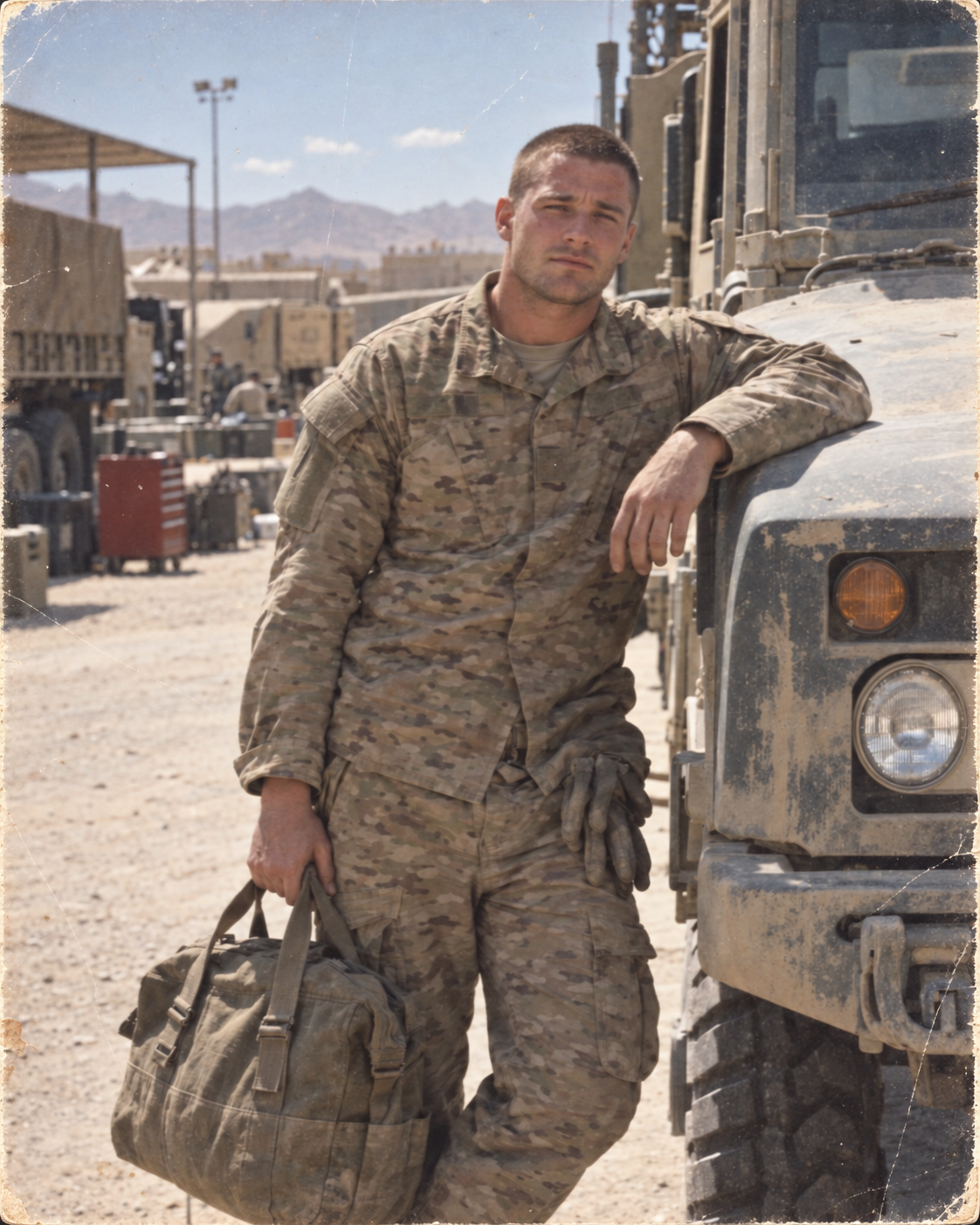
Thomas during his years of service.
“Equipment never fails when it is convenient. That experience shaped the way I build gear today.”
Why I returned to the ALICE design
Ask about American field gear from the past fifty years, and one name keeps returning: ALICE.
Introduced in the 1970s, ALICE—All-Purpose Lightweight Individual Carrying Equipment—was developed to help service members carry fighting and existence loads across hot, temperate, cold, wet, and arctic environments.
Its strength was not unnecessary complexity. It was a direct, practical layout: a large central compartment for the main load and three dimensional exterior pockets that kept frequently needed equipment within reach.
Water, rations, gloves, tools, medical essentials, and smaller field items could be organized without digging through the entire pack. The top flap helped protect the load, while reinforced webbing distributed stress across the body of the pack.
It earned respect because it was uncomplicated, adaptable, and made to work in demanding conditions.
After leaving the Army, I had trouble finding outdoor gear that felt honest. Too many modern packs were built from thin synthetic fabric, lightweight zippers, and molded plastic hardware. They looked clean under store lighting, but they did not feel like equipment I would want to depend on for years.
Lighter does not always mean weaker, and modern materials have their advantages. But for people who value older field equipment, something important was being lost: the reassuring weight, visible reinforcement, repairable simplicity, and character that develops through years of use.
I believed that standard was worth carrying forward.
The M-14 is not intended to be a museum reproduction. It carries forward the recognizable three-pocket ALICE architecture as a pack made for modern everyday use.
Original military ALICE packs were primarily made from nylon duck. This version deliberately uses 16 oz washed cotton duck canvas—heavier in the hand, naturally textured, and designed to soften and develop a personal patina over time.
Rebuilt at my workbench
I found an old cast-iron walking-foot sewing machine, cleared a space in my garage, and began working with canvas, webbing, thread, buckles, and rivets.
The machine is loud, heavy, and slow. Dense layers of canvas fight the needle. Corners have to be guided by hand, high-stress seams require additional stitching, and every strap must be positioned where the load actually falls.
Each pack is cut, stitched, assembled, and inspected in my workshop. Before one leaves the bench, I check the seams, pull the straps, test the closures, and inspect the main load points by hand.
I do not send out a pack unless I am willing to put my own name behind it.
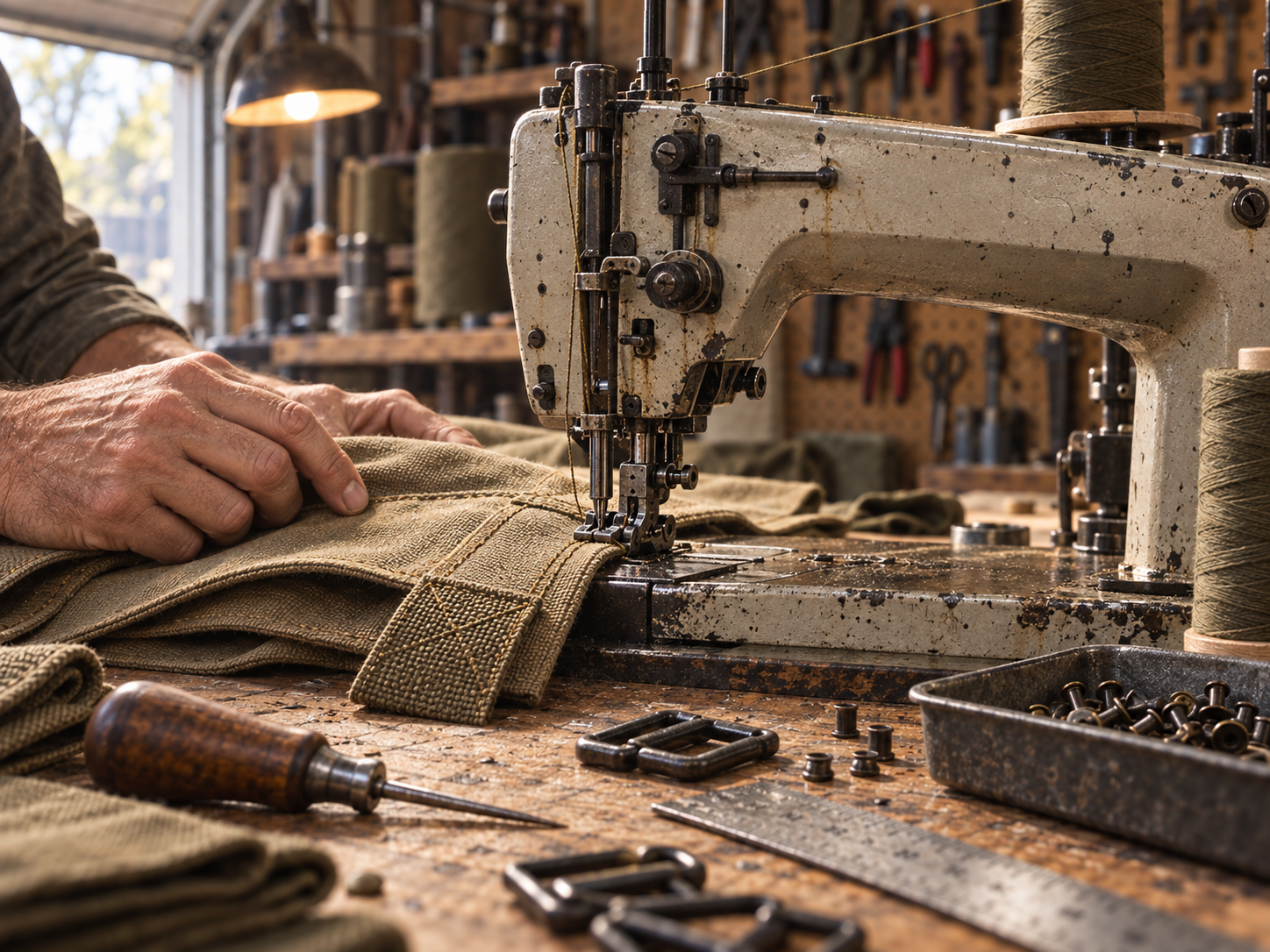
The first workshop run
This is not a mass-produced fashion release. Working in small batches takes longer, but it allows me to inspect the details that automated production often overlooks.
The limited quantity reflects how many I can properly make and check—not manufactured scarcity. When this run is gone, the next batch will depend on the time and materials available in the workshop.
The old standard, built for modern use
Dense cotton canvas gives the pack a substantial feel. It arrives slightly broken in and becomes softer and more personal through use.
Heavy webbing and reinforced stitching support the flap, pocket closures, strap attachments, and other repeated-stress areas.
Military-finish metal buckles, adjusters, and rings give the external closures a solid mechanical feel without unnecessary decoration.
The exterior pockets keep frequently used equipment separate, while the main compartment carries clothing, books, and bulkier gear.
One pack, many uses
Camping: Carry dry layers, lighting, cooking essentials, tools, and compact camp equipment.
Fishing: Keep tackle, gloves, snacks, and frequently used tools in separate exterior pockets.
Road trips: Organize water, documents, a camera, roadside equipment, and personal essentials.
Everyday carry: Bring field-pack organization to the workshop, vehicle, commute, or weekend.
Military-history enthusiasts: Carry a functional modern interpretation of a recognizable American load-carrying design.
Designed to age with use
Heavy cotton canvas softens, relaxes, and develops subtle tonal variation wherever it is folded, handled, or exposed to the weather.
Creases, faded edges, and surface marks are not defects. A year from now, your pack should look more like yours than it did when you opened the box. That is exactly the point.
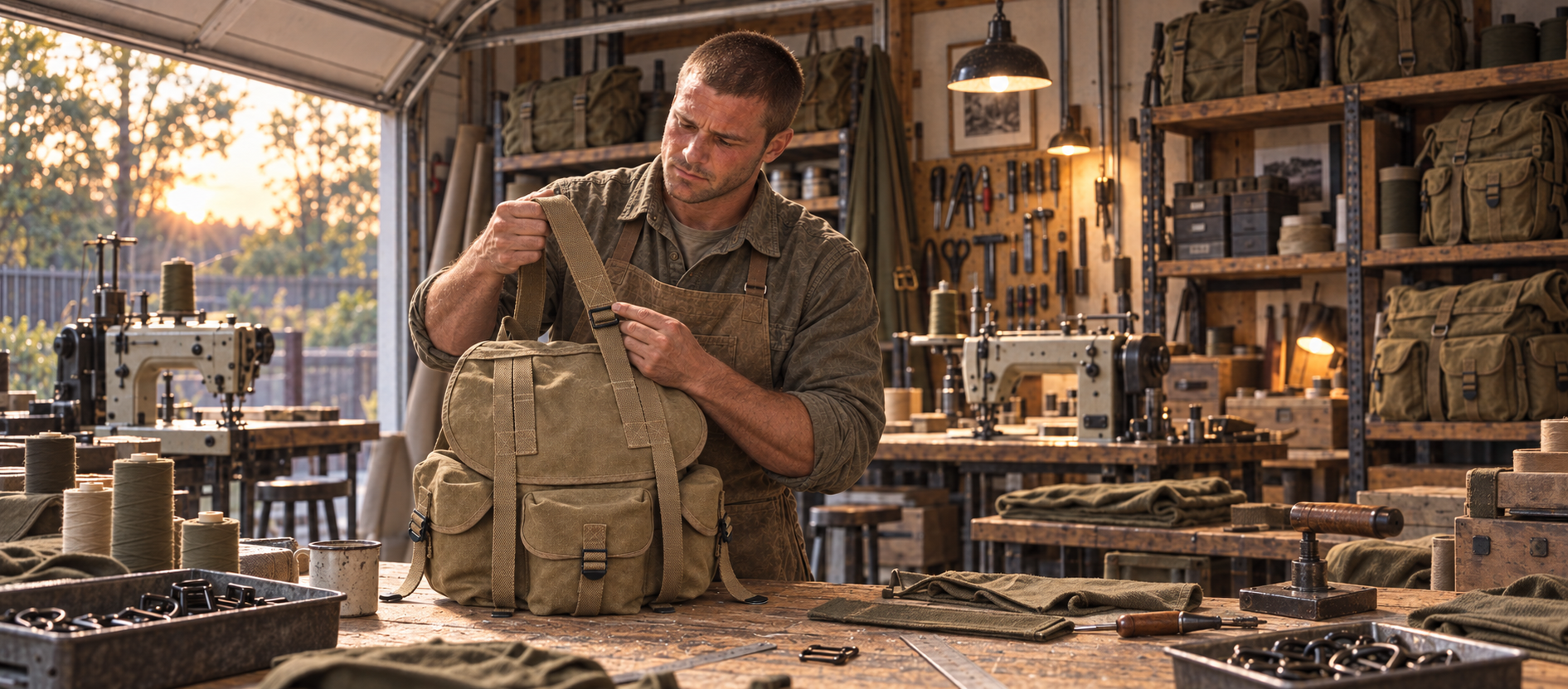
Product details
| Product Name | M-14 ALICE Heritage Canvas Field Pack |
|---|---|
| Design | Inspired by the classic U.S. ALICE field-pack layout |
| Material | 16 oz washed cotton duck canvas |
| Webbing | Reinforced heavy-duty webbing |
| Hardware | Military-finish metal external hardware |
| Storage | Main compartment with three exterior utility pockets |
| Finish | Pre-washed, naturally broken-in heritage finish |
| Best For | Camping, fishing, travel, road trips, workshops, and everyday carry |
| Production | Handmade and individually inspected in Thomas’s workshop |
| Availability | First production run of 50 packs |
| Classification | Modern heritage product; not military surplus or official U.S. Army equipment |
Why your order matters
NORTHPAW began because I did not want disposable gear to become the only option.
Your order supports the time it takes to sew dense canvas, reinforce a load point properly, test every strap, and inspect every finished pack by hand.
I am proud to make it. I hope you carry it for a very long time.
Built for years, not seasons.